


Everything You Need to Know About the O-Shot and M-Shot
By: The Hidden Epidemic of Sexual Health and What We Can Do

Tempe 480.968.5673
Glendale 602.374.3374
Phoenix 602.441.3305
Chandler480.447.1165
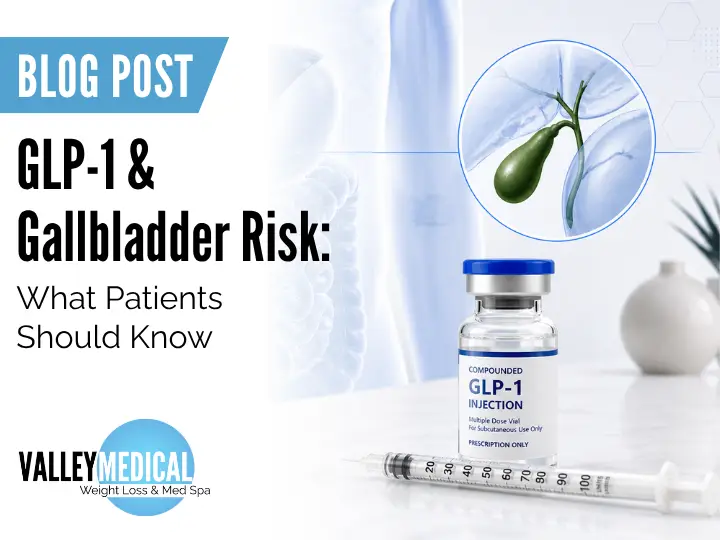

GLP-1 medications can be a helpful tool for medical weight loss, but they are not risk-free. One topic that deserves a clear, honest conversation is gallbladder risk. For some patients, GLP-1 use and rapid weight loss can increase the chance of gallbladder issues, including gallstones.
This is also why it matters where you get your care. Instead of ordering medication online and trying to manage side effects on your own, physician-supervised treatment gives you a plan that fits your health history, your goals, and how your body responds over time.
GLP-1 medications (glucagon-like peptide-1 receptor agonists) are used to support weight loss by helping with appetite control, cravings, and blood sugar regulation. At Valley Medical Weight Loss, patients may be prescribed compounded semaglutide or compounded tirzepatide, depending on medical history and physician guidance.
GLP-1s can be effective, but the best outcomes come from a full program – not just a prescription. That includes medical oversight, realistic expectations, and ongoing check-ins.
Subscribe for expert insights on lipotropic injections, metabolism support, and proven weight loss strategies. Get practical advice delivered straight to your inbox.
Gallbladder problems are not unique to GLP-1s. Rapid weight loss from any method can increase the risk of gallstones. Here’s the simple version of why:
GLP-1 medications can contribute to faster weight loss and can also affect digestion. For certain patients, that may raise the likelihood of gallbladder-related side effects.
Not everyone on a GLP-1 will have gallbladder issues, but it’s important to understand the possibility and know what to watch for. Gallbladder concerns can range from mild discomfort to more serious inflammation or blockage that needs urgent care.
Key takeaway: This is not meant to scare you away from treatment. It’s meant to help you make a safer decision with the right medical support.
Call a medical professional right away if you have symptoms like:
If symptoms feel severe, sudden, or worsening, seek urgent medical care.
Gallbladder risk varies by person. Some factors that can increase risk include:
Your risk profile is one reason a cookie-cutter online approach is not ideal. A physician should review your history and help you choose the safest path forward.
Subscribe for expert insights on lipotropic injections, metabolism support, and proven weight loss strategies. Get practical advice delivered straight to your inbox.
GLP-1s are not “one dose fits all.” Patients can respond differently, and side effects can change over time. When treatment is supervised by an in-house physician, you have support for:
If you’re getting medication online without real medical follow-up, it can be harder to know what’s normal, what’s not, and what to do next. With physician-supervised care, you’re not guessing.
At Valley Medical Weight Loss, your program is built around your needs and guided by our in-house physician. Many patients benefit from a weekly structure and consistent check-ins, while others need a different approach based on health history, goals, and tolerance.
If you’re considering GLP-1 treatment and you want a plan that prioritizes safety, education, and ongoing support, we’re here to help.
If you have questions about GLP-1 medications, side effects, or gallbladder risk, the best next step is a real conversation with a medical team.
Call Valley Medical Weight Loss: 602-883-7599
They can increase the risk for some patients, especially when weight loss is rapid. Risk varies based on your history and how your body responds.
Both medications can be associated with gallbladder-related side effects in some patients. Your physician can help weigh risks and benefits based on your situation.
Do not ignore it. Call a medical professional promptly. If pain is severe, sudden, or comes with fever, vomiting, or jaundice, seek urgent care.
Do not make medication changes without medical guidance. Contact your prescribing medical team right away for next steps.
Valley Medical Weight Loss provides physician-supervised medical weight loss programs with a supportive, judgment-free approach. We help patients build sustainable habits and choose treatment options that fit their health history and goals.
Locations: Phoenix, | Glendale | Tempe | Chandler
Call 602-883-7599
This article is for educational purposes only and is not medical advice. GLP-1 medications may cause side effects and are not appropriate for everyone. Always talk with a qualified, licensed medical professional about your symptoms, medical history, and treatment options. If you think you may be experiencing a medical emergency, call 911 or go to the nearest emergency room.
Compounded medications are prepared by specialized pharmacies. Compounded drugs are not FDA-approved in the same way as commercially available products. Your eligibility and treatment plan should be determined by a licensed medical provid
By Dr. Samuel Zuniga, ND
Valley Medical Weight Loss | Chandler, Arizona
GLP-1 medications can be a helpful tool for medical weight loss, but they are not risk-free. One topic that deserves a clear, honest conversation is gallbladder risk. For some patients, GLP-1 use and rapid weight loss can increase the chance of gallbladder issues, including gallstones.
This is also why it matters where you get your care. Instead of ordering medication online and trying to manage side effects on your own, physician-supervised treatment gives you a plan that fits your health history, your goals, and how your body responds over time.
GLP-1 medications (glucagon-like peptide-1 receptor agonists) are used to support weight loss by helping with appetite control, cravings, and blood sugar regulation. At Valley Medical Weight Loss, patients may be prescribed compounded semaglutide or compounded tirzepatide, depending on medical history and physician guidance.
GLP-1s can be effective, but the best outcomes come from a full program – not just a prescription. That includes medical oversight, realistic expectations, and ongoing check-ins.
Subscribe for expert insights on lipotropic injections, metabolism support, and proven weight loss strategies. Get practical advice delivered straight to your inbox.
Gallbladder problems are not unique to GLP-1s. Rapid weight loss from any method can increase the risk of gallstones. Here’s the simple version of why:
GLP-1 medications can contribute to faster weight loss and can also affect digestion. For certain patients, that may raise the likelihood of gallbladder-related side effects.
Not everyone on a GLP-1 will have gallbladder issues, but it’s important to understand the possibility and know what to watch for. Gallbladder concerns can range from mild discomfort to more serious inflammation or blockage that needs urgent care.
Key takeaway: This is not meant to scare you away from treatment. It’s meant to help you make a safer decision with the right medical support.
Call a medical professional right away if you have symptoms like:
If symptoms feel severe, sudden, or worsening, seek urgent medical care.
Gallbladder risk varies by person. Some factors that can increase risk include:
Your risk profile is one reason a cookie-cutter online approach is not ideal. A physician should review your history and help you choose the safest path forward.
Subscribe for expert insights on lipotropic injections, metabolism support, and proven weight loss strategies. Get practical advice delivered straight to your inbox.
GLP-1s are not “one dose fits all.” Patients can respond differently, and side effects can change over time. When treatment is supervised by an in-house physician, you have support for:
If you’re getting medication online without real medical follow-up, it can be harder to know what’s normal, what’s not, and what to do next. With physician-supervised care, you’re not guessing.
At Valley Medical Weight Loss, your program is built around your needs and guided by our in-house physician. Many patients benefit from a weekly structure and consistent check-ins, while others need a different approach based on health history, goals, and tolerance.
If you’re considering GLP-1 treatment and you want a plan that prioritizes safety, education, and ongoing support, we’re here to help.
If you have questions about GLP-1 medications, side effects, or gallbladder risk, the best next step is a real conversation with a medical team.
Call Valley Medical Weight Loss: 602-883-7599
They can increase the risk for some patients, especially when weight loss is rapid. Risk varies based on your history and how your body responds.
Both medications can be associated with gallbladder-related side effects in some patients. Your physician can help weigh risks and benefits based on your situation.
Do not ignore it. Call a medical professional promptly. If pain is severe, sudden, or comes with fever, vomiting, or jaundice, seek urgent care.
Do not make medication changes without medical guidance. Contact your prescribing medical team right away for next steps.
Valley Medical Weight Loss provides physician-supervised medical weight loss programs with a supportive, judgment-free approach. We help patients build sustainable habits and choose treatment options that fit their health history and goals.
Locations: Phoenix, | Glendale | Tempe | Chandler
Call 602-883-7599
This article is for educational purposes only and is not medical advice. GLP-1 medications may cause side effects and are not appropriate for everyone. Always talk with a qualified, licensed medical professional about your symptoms, medical history, and treatment options. If you think you may be experiencing a medical emergency, call 911 or go to the nearest emergency room.
Compounded medications are prepared by specialized pharmacies. Compounded drugs are not FDA-approved in the same way as commercially available products. Your eligibility and treatment plan should be determined by a licensed medical provid
EXCELLENTTrustindex verifies that the original source of the review is Google. I’ve had a great experience working with Valley Medical in Chandler. I have lost 20 pounds so far with the help from Alejandra, she has been very informative on this journey. Everyone here is very friendly and personable. If you are looking to lose weight and have more energy I would highly recommend coming to start your journey!Posted onTrustindex verifies that the original source of the review is Google. Love it here ! Friendly, fast and makes me feel motivated ! Christine and Amelia were phenomenal slay queens ! I've lost 5ibs since being here ! I'm ready to keep going 🩵Posted onTrustindex verifies that the original source of the review is Google. Alejandra was fantastic one of the best workers up in the office had a great and uplifting attitude she went above and beyond to help answers all questions efficiently would highly recommend goin here 12 out of 10 ratings great jobPosted onTrustindex verifies that the original source of the review is Google. I highly recommend Valley Medical Weight Loss! Alejandra has been amazing from day one supportive, motivating, and truly invested in my success. In just over 8 weeks, I’ve lost nearly 30 pounds. They genuinely care about your health and make the process feel manageable and personalized. Thank you, Alejandra!Posted onTrustindex verifies that the original source of the review is Google. Awesome staff, courteous and clean. I’m down 40 lbs in one month. Prices for supplements are better than getting them from Amazon!Posted onTrustindex verifies that the original source of the review is Google. Stephanie muy linda y atenta persona muy buena explicación hacerca del tratamientoPosted onTrustindex verifies that the original source of the review is Google. Happy they have a location in chandler now. Staff is extremely friendly and helpful.Posted onTrustindex verifies that the original source of the review is Google. I’ve had a great experience here so far. The staff is absolutely amazing very kind, supportive, and always willing to answer my questions. They truly make you feel comfortable and encouraged throughout the weight-loss process. I’m seeing results and feel well taken care of. Highly recommend!Posted onTrustindex verifies that the original source of the review is Google. Love the new clinic, the space is beautiful and welcoming, and the staff was amazing! Alejandra took great care of me. She was very informative, made me feel comfortable throughout the whole process, and I honestly didn’t even feel my injection. Such a great experience, and I’m already looking forward to coming back!Verified by TrustindexTrustindex verified badge is the Universal Symbol of Trust. Only the greatest companies can get the verified badge who has a review score above 4.5, based on customer reviews over the past 12 months. Read more
By: The Hidden Epidemic of Sexual Health and What We Can Do

By: Health and wellness technology has exploded in recent years. From smartwatches

How to Stay Motivated with Slow Weight Loss By: You’re doing everything
M, Tues, Thurs, F: 9axm-4:30pm
Sat: 8am-1:30pm
Wed, Sun: Closed