




Everything You Need to Know About the O-Shot and M-Shot
By: The Hidden Epidemic of Sexual Health and What We Can Do

Tempe 480.968.5673
Glendale 602.374.3374
Phoenix 602.441.3305
Chandler480.447.1165
By: Ever wondered if expensive skincare products are worth their price? Or maybe you’ve invested in a high-end serum only to be disappointed by the results. If you’ve ever stood in the skincare aisle (or scrolled through an online beauty store) feeling overwhelmed and confused, you’re not alone. The truth
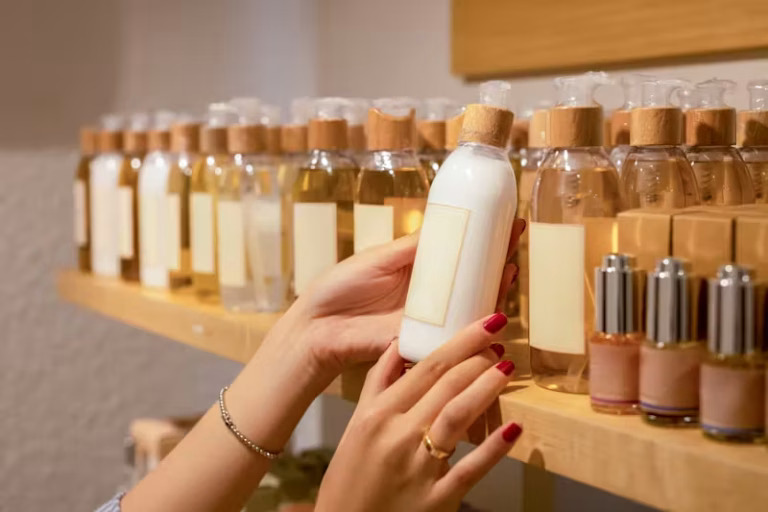

Ever wondered if expensive skincare products are worth their price? Or maybe you’ve invested in a high-end serum only to be disappointed by the results. If you’ve ever stood in the skincare aisle (or scrolled through an online beauty store) feeling overwhelmed and confused, you’re not alone.
The truth is, you don’t need to spend hundreds of dollars on every product in your routine. For most people, a mix of low, mid, and high-end products is the way to go. The key is knowing where to splurge and where to save.
At Valley Medical Weight Loss and Med Spa, we believe that great skin starts with smart choices. That’s why we’re breaking down the science behind skincare pricing and giving you a clear roadmap for building an effective, budget-friendly routine.
Let’s start with the big question: Are expensive skincare products actually better, or are you just paying for the brand name?
The answer is: it depends.
Generally speaking, high-end brands tend to use higher concentrations of active ingredients and invest heavily in research and development. Brands like La Prairie, Augustinus Bader, and SkinCeuticals have decades of scientific research behind their formulas, which is reflected in the price.
However, in some cases, you are paying for luxury branding. For example, many couture fashion brands (think Chanel, Dior, or Gucci) sell skincare and makeup. While the quality is often excellent, part of what you’re paying for is the prestige of the brand name.
The bottom line? Focus less on price and more on the ingredient range, concentration, and how the product addresses your specific skincare needs.
When you find a facial serum, moisturiser, or eye cream that works well, it’s tempting to invest in the full collection. But here’s the truth: you don’t need to.
What’s more important is to focus on your current, seasonal, and evolving skincare needs. When you select products based on their ingredient range and efficacy (rather than brand loyalty), you’re more likely to mix and match brands. This includes splurging on some products and saving on others.
The key is flexibility. Your skin’s needs change with the seasons, your age, and your environment, so your routine should change too.
Avoid the temptation of purchasing trending products just because they’re popular on social media. Instead, build your skincare routine around products formulated for your skin type, skin conditions, and local environment.
Select products that are formulated for your skin type. This could be normal, dry, oily, sensitive, or a combination. Keep in mind that your skin type can change in each season of life. For example, you may struggle more with acne in your teens and early 20s. Or your skin may become dry as perimenopause begins. Collagen production also slows during perimenopause. For many women, hormone replacement therapy has a hydrating, lifting, and firming effect that can’t be achieved with luxury skin products alone.
Select ingredients that are formulated to address your current skin conditions. Skin conditions may change from winter to summer, and as your skin matures. Once you find what works, you’ll need to make changes to your skincare routine at least every 10 years.
Common skin conditions include:
If you move from one city or state to another, you may find that your skincare needs change. Arizona summers are hot and dry, and the winters are cold and dry. So, if you recently moved to the Phoenix area from another state, your skin may feel dry, but it’s likely dehydrated.
Dry skin is a skin type, but dehydration is a skin condition. Dehydrated skin could be a sign of internal dehydration. With our extreme summer heat, you may need to drink more than 64 ounces of water per day to avoid dehydration. In addition to increasing your fluid intake, increase your electrolyte intake and omega fatty acid intake. Externally, transition to skincare products with hyaluronic acid, omega fatty acids, and ingredients that minimise moisture loss.
If you’re trying to reduce the chemicals in your diet and skincare products, you may begin to explore brands formulated with 100% natural ingredients. You’ll find that many luxury skincare products are vegan and formulated with natural botanicals. However, they may not be 100% natural. Although not entirely natural, most luxury brands keep chemical ingredients to a minimum. This isn’t only because they’re not environmentally friendly, but because many chemicals are harsh on the skin.
When shopping for products without synthetic ingredients, use the same approach above. Shop for your skin type, skin condition, and environment, and don’t limit yourself to one brand.
Before you splurge on expensive skincare products, try a sample size. With most products, you may see and feel results in 7 to 10 days, with full benefits at 2 or 3 months. A sample size gives you at least a week to see how your skin responds.
Christmas and Mother’s Day are excellent times to try new skincare products. This is when department store beauty brands, online retailers, and mid-range retailers offer bundles. This allows you to try different serums and night creams. It’s also a good time to try new makeup and haircare products and stock up on products you know and love.
Join our newsletter for expert insights on injectables, facial rejuvenation, and the latest aesthetic treatments. Our medical team shares practical advice to help you look and feel your best.
Generally, skincare products should not sting, burn, or cause irritation. If your skin is dry or irritated, products that don’t typically sting may sting. Most products that cause irritation are too harsh, not for your skin type, or contain ingredients your skin needs time to adjust to.
For example, vitamin C serums formulated with ascorbic acid may cause mild skin irritation. Vitamin C oils formulated from tetrahexyldecyl ascorbate are gentler. However, tetrahexyldecyl ascorbate-based vitamin C products often cost twice the price of ascorbic acid products.
We’ve all been there! If you have a facial serum or moisturiser that didn’t work for you, use it on your hands or feet! If the face cream has SPF, pop it in your purse to use as daytime hand cream. Or give it to a friend or family member to try.
Let’s explore when to shop for expensive skincare products and when to choose low or mid-range options.
Splurge on condition-specific products. Although anti-ageing products are mentioned below, you might only splurge on your serum and moisturiser.
Common skin conditions include:
Your cleanser is one place you can save. Prioritise gentle formulas that won’t strip your skin. If you wear full makeup, consider double cleansing in the winter to remove your makeup.
Even if you use a gentle cleanser, it may be slightly acidic. Toner helps to rebalance your skin’s pH levels. Ensure your toner is gentle and alcohol-free.
Facial serums are restorative formulas designed to deliver nourishing antioxidants deep into your pores. High-quality and concentrated formulas tend to cost more.
Before the signs of ageing begin, you can use anti-ageing serums a few days a week as a proactive approach. Or use sheet masks a few days a week. Sheet masks are often cost-effective and formulated to address specific skin conditions.
As your skin matures, expect to pay more for anti-ageing formulas.
As your skin matures, expect to pay more for anti-ageing formulas.
Price is less of a factor with UV protection, but there are times you may want to splurge. Ensure your product is broad-spectrum SPF 35, preferably SPF 50. Apply after your facial moisturiser or facial oil, and before your makeup. If you’re layering products with UV protection, they don’t “add up.” For example, if your facial moisturiser is SPF 25 and your foundation is SPF 15, your SPF protection is 25 (not 40).
Your daily moisturiser may have SPF protection built in, but it may not be broad-spectrum, and it may be lower than 35. Your makeup may also have SPF protection. Like your moisturiser, it may not be broad-spectrum and may be lower than 35.
If you don’t wear makeup or prefer light coverage, consider splurging on a UV product with skincare ingredients built in, such as ISDIN Fusion Water or other ISDIN products.
In your teens, 20s, and 30s, standard granular exfoliators are sufficient. Maybe even silicone exfoliating brushes. By your late 40s, your skin’s natural exfoliating process slows. This is when you want to transition to gentle chemical exfoliators, which cost a bit more.
Look for chemical exfoliators with alpha hydroxy acid, glycolic acid, lactic acid, beta hydroxy acid, or polyhydroxy acids. These are gentle on your skin when used as directed.
Deep cleansing mud and clay masks can span the range of inexpensive to mid-range and high-end. Products that cost a bit more are typically infused with ingredients that nourish while they cleanse. Also, consider investing in an at-home facial steamer to use before your clay mask, or before you apply your PM serum and moisturiser.
As skin matures, consider monthly or quarterly deep-cleansing facials.
In addition to knowing when to splurge on expensive skincare products, learn which med spa treatments can help you achieve your aesthetic objectives. Valley Medical Weight Loss and Med Spa provides a range of treatments to fade hyperpigmentation, lift, firm, smooth, refine, contour, and plump. We have treatments for your face, jawline, neck, and body.
Contact us today to schedule a free consultation at any of our four Valley locations:
Let’s help you achieve the radiant, healthy skin you deserve.
By Dr. Samuel Zuniga, ND
Valley Medical Weight Loss | Chandler, Arizona
Ever wondered if expensive skincare products are worth their price? Or maybe you’ve invested in a high-end serum only to be disappointed by the results. If you’ve ever stood in the skincare aisle (or scrolled through an online beauty store) feeling overwhelmed and confused, you’re not alone.
The truth is, you don’t need to spend hundreds of dollars on every product in your routine. For most people, a mix of low, mid, and high-end products is the way to go. The key is knowing where to splurge and where to save.
At Valley Medical Weight Loss and Med Spa, we believe that great skin starts with smart choices. That’s why we’re breaking down the science behind skincare pricing and giving you a clear roadmap for building an effective, budget-friendly routine.
Let’s start with the big question: Are expensive skincare products actually better, or are you just paying for the brand name?
The answer is: it depends.
Generally speaking, high-end brands tend to use higher concentrations of active ingredients and invest heavily in research and development. Brands like La Prairie, Augustinus Bader, and SkinCeuticals have decades of scientific research behind their formulas, which is reflected in the price.
However, in some cases, you are paying for luxury branding. For example, many couture fashion brands (think Chanel, Dior, or Gucci) sell skincare and makeup. While the quality is often excellent, part of what you’re paying for is the prestige of the brand name.
The bottom line? Focus less on price and more on the ingredient range, concentration, and how the product addresses your specific skincare needs.
When you find a facial serum, moisturiser, or eye cream that works well, it’s tempting to invest in the full collection. But here’s the truth: you don’t need to.
What’s more important is to focus on your current, seasonal, and evolving skincare needs. When you select products based on their ingredient range and efficacy (rather than brand loyalty), you’re more likely to mix and match brands. This includes splurging on some products and saving on others.
The key is flexibility. Your skin’s needs change with the seasons, your age, and your environment, so your routine should change too.
Avoid the temptation of purchasing trending products just because they’re popular on social media. Instead, build your skincare routine around products formulated for your skin type, skin conditions, and local environment.
Select products that are formulated for your skin type. This could be normal, dry, oily, sensitive, or a combination. Keep in mind that your skin type can change in each season of life. For example, you may struggle more with acne in your teens and early 20s. Or your skin may become dry as perimenopause begins. Collagen production also slows during perimenopause. For many women, hormone replacement therapy has a hydrating, lifting, and firming effect that can’t be achieved with luxury skin products alone.
Select ingredients that are formulated to address your current skin conditions. Skin conditions may change from winter to summer, and as your skin matures. Once you find what works, you’ll need to make changes to your skincare routine at least every 10 years.
Common skin conditions include:
If you move from one city or state to another, you may find that your skincare needs change. Arizona summers are hot and dry, and the winters are cold and dry. So, if you recently moved to the Phoenix area from another state, your skin may feel dry, but it’s likely dehydrated.
Dry skin is a skin type, but dehydration is a skin condition. Dehydrated skin could be a sign of internal dehydration. With our extreme summer heat, you may need to drink more than 64 ounces of water per day to avoid dehydration. In addition to increasing your fluid intake, increase your electrolyte intake and omega fatty acid intake. Externally, transition to skincare products with hyaluronic acid, omega fatty acids, and ingredients that minimise moisture loss.
If you’re trying to reduce the chemicals in your diet and skincare products, you may begin to explore brands formulated with 100% natural ingredients. You’ll find that many luxury skincare products are vegan and formulated with natural botanicals. However, they may not be 100% natural. Although not entirely natural, most luxury brands keep chemical ingredients to a minimum. This isn’t only because they’re not environmentally friendly, but because many chemicals are harsh on the skin.
When shopping for products without synthetic ingredients, use the same approach above. Shop for your skin type, skin condition, and environment, and don’t limit yourself to one brand.
Before you splurge on expensive skincare products, try a sample size. With most products, you may see and feel results in 7 to 10 days, with full benefits at 2 or 3 months. A sample size gives you at least a week to see how your skin responds.
Christmas and Mother’s Day are excellent times to try new skincare products. This is when department store beauty brands, online retailers, and mid-range retailers offer bundles. This allows you to try different serums and night creams. It’s also a good time to try new makeup and haircare products and stock up on products you know and love.
Join our newsletter for expert insights on injectables, facial rejuvenation, and the latest aesthetic treatments. Our medical team shares practical advice to help you look and feel your best.
Generally, skincare products should not sting, burn, or cause irritation. If your skin is dry or irritated, products that don’t typically sting may sting. Most products that cause irritation are too harsh, not for your skin type, or contain ingredients your skin needs time to adjust to.
For example, vitamin C serums formulated with ascorbic acid may cause mild skin irritation. Vitamin C oils formulated from tetrahexyldecyl ascorbate are gentler. However, tetrahexyldecyl ascorbate-based vitamin C products often cost twice the price of ascorbic acid products.
We’ve all been there! If you have a facial serum or moisturiser that didn’t work for you, use it on your hands or feet! If the face cream has SPF, pop it in your purse to use as daytime hand cream. Or give it to a friend or family member to try.
Let’s explore when to shop for expensive skincare products and when to choose low or mid-range options.
Splurge on condition-specific products. Although anti-ageing products are mentioned below, you might only splurge on your serum and moisturiser.
Common skin conditions include:
Your cleanser is one place you can save. Prioritise gentle formulas that won’t strip your skin. If you wear full makeup, consider double cleansing in the winter to remove your makeup.
Even if you use a gentle cleanser, it may be slightly acidic. Toner helps to rebalance your skin’s pH levels. Ensure your toner is gentle and alcohol-free.
Facial serums are restorative formulas designed to deliver nourishing antioxidants deep into your pores. High-quality and concentrated formulas tend to cost more.
Before the signs of ageing begin, you can use anti-ageing serums a few days a week as a proactive approach. Or use sheet masks a few days a week. Sheet masks are often cost-effective and formulated to address specific skin conditions.
As your skin matures, expect to pay more for anti-ageing formulas.
As your skin matures, expect to pay more for anti-ageing formulas.
Price is less of a factor with UV protection, but there are times you may want to splurge. Ensure your product is broad-spectrum SPF 35, preferably SPF 50. Apply after your facial moisturiser or facial oil, and before your makeup. If you’re layering products with UV protection, they don’t “add up.” For example, if your facial moisturiser is SPF 25 and your foundation is SPF 15, your SPF protection is 25 (not 40).
Your daily moisturiser may have SPF protection built in, but it may not be broad-spectrum, and it may be lower than 35. Your makeup may also have SPF protection. Like your moisturiser, it may not be broad-spectrum and may be lower than 35.
If you don’t wear makeup or prefer light coverage, consider splurging on a UV product with skincare ingredients built in, such as ISDIN Fusion Water or other ISDIN products.
In your teens, 20s, and 30s, standard granular exfoliators are sufficient. Maybe even silicone exfoliating brushes. By your late 40s, your skin’s natural exfoliating process slows. This is when you want to transition to gentle chemical exfoliators, which cost a bit more.
Look for chemical exfoliators with alpha hydroxy acid, glycolic acid, lactic acid, beta hydroxy acid, or polyhydroxy acids. These are gentle on your skin when used as directed.
Deep cleansing mud and clay masks can span the range of inexpensive to mid-range and high-end. Products that cost a bit more are typically infused with ingredients that nourish while they cleanse. Also, consider investing in an at-home facial steamer to use before your clay mask, or before you apply your PM serum and moisturiser.
As skin matures, consider monthly or quarterly deep-cleansing facials.
In addition to knowing when to splurge on expensive skincare products, learn which med spa treatments can help you achieve your aesthetic objectives. Valley Medical Weight Loss and Med Spa provides a range of treatments to fade hyperpigmentation, lift, firm, smooth, refine, contour, and plump. We have treatments for your face, jawline, neck, and body.
Contact us today to schedule a free consultation at any of our four Valley locations:
Let’s help you achieve the radiant, healthy skin you deserve.
EXCELLENTTrustindex verifies that the original source of the review is Google. I’ve had a great experience working with Valley Medical in Chandler. I have lost 20 pounds so far with the help from Alejandra, she has been very informative on this journey. Everyone here is very friendly and personable. If you are looking to lose weight and have more energy I would highly recommend coming to start your journey!Posted onTrustindex verifies that the original source of the review is Google. Love it here ! Friendly, fast and makes me feel motivated ! Christine and Amelia were phenomenal slay queens ! I've lost 5ibs since being here ! I'm ready to keep going 🩵Posted onTrustindex verifies that the original source of the review is Google. Alejandra was fantastic one of the best workers up in the office had a great and uplifting attitude she went above and beyond to help answers all questions efficiently would highly recommend goin here 12 out of 10 ratings great jobPosted onTrustindex verifies that the original source of the review is Google. I highly recommend Valley Medical Weight Loss! Alejandra has been amazing from day one supportive, motivating, and truly invested in my success. In just over 8 weeks, I’ve lost nearly 30 pounds. They genuinely care about your health and make the process feel manageable and personalized. Thank you, Alejandra!Posted onTrustindex verifies that the original source of the review is Google. Awesome staff, courteous and clean. I’m down 40 lbs in one month. Prices for supplements are better than getting them from Amazon!Posted onTrustindex verifies that the original source of the review is Google. Stephanie muy linda y atenta persona muy buena explicación hacerca del tratamientoPosted onTrustindex verifies that the original source of the review is Google. Happy they have a location in chandler now. Staff is extremely friendly and helpful.Posted onTrustindex verifies that the original source of the review is Google. I’ve had a great experience here so far. The staff is absolutely amazing very kind, supportive, and always willing to answer my questions. They truly make you feel comfortable and encouraged throughout the weight-loss process. I’m seeing results and feel well taken care of. Highly recommend!Posted onTrustindex verifies that the original source of the review is Google. Love the new clinic, the space is beautiful and welcoming, and the staff was amazing! Alejandra took great care of me. She was very informative, made me feel comfortable throughout the whole process, and I honestly didn’t even feel my injection. Such a great experience, and I’m already looking forward to coming back!Verified by TrustindexTrustindex verified badge is the Universal Symbol of Trust. Only the greatest companies can get the verified badge who has a review score above 4.5, based on customer reviews over the past 12 months. Read more
By: The Hidden Epidemic of Sexual Health and What We Can Do

By: Health and wellness technology has exploded in recent years. From smartwatches

How to Stay Motivated with Slow Weight Loss By: You’re doing everything
M, Tues, Thurs, F: 9axm-4:30pm
Sat: 8am-1:30pm
Wed, Sun: Closed