


Everything You Need to Know About the O-Shot and M-Shot
By: The Hidden Epidemic of Sexual Health and What We Can Do

Tempe 480.968.5673
Glendale 602.374.3374
Phoenix 602.441.3305
Chandler480.447.1165
Address Hormonal Skin Changes at Every Stage By: If you’re nearing or over 50 and your skin is starting to look and feel different or age more rapidly, it may be more than standard aging. It may be a symptom of perimenopause. For some women, menopause skin changes are some


Published:
Updated:
Published:
Updated:
If you’re nearing or over 50 and your skin is starting to look and feel different or age more rapidly, it may be more than standard aging. It may be a symptom of perimenopause. For some women, menopause skin changes are some of the first symptoms they notice. If not identified as perimenopause, it’s challenging to resolve your skin issues.
At Valley Medical Weight Loss across all four Phoenix metro locations, we understand how frustrating and concerning these skin changes can be. Through work with thousands of women, we’ve seen how hormone replacement therapy (HRT), tailored skincare, and med spa treatments can dramatically improve menopause-related skin concerns.
Let’s dive into some of the ways your skin and hair may change and how you can address them effectively.
Before we dive into potential aesthetic changes, let’s uncover what menopause is. The words perimenopause and menopause are often used interchangeably. However, this natural transition has 3 distinct phases.
The three phases:
1 Perimenopause (transition phase)
2 Menopause (the milestone)
3 Postmenopause (after menopause)
Lower estrogen levels in all 3 phases increase your risk for osteoporosis, cardiovascular disease, cognitive decline, and skin issues. For this reason, many women turn to hormone replacement therapy. Hormone therapy can minimize most of the symptoms that accompany this natural transition, including minimizing menopause skin changes.
Irregular periods, hot flashes, insomnia, night sweats, and menopause belly are some of the more common perimenopause symptoms that may be on your radar. However, there are over 20 symptoms that may accompany perimenopause.
Common symptoms include:
Many women don’t realize their skin concerns are hormone-related, which is why understanding the connection is so important.
Let’s explore how these changes present themselves in perimenopause and what you can do to minimize your symptoms.
We all lose about 1% of our collagen production per year starting in our 20s. This decline accelerates during perimenopause, where collagen production will slow another 30% within the first 5 years. After the first 5 years, this decreases to a 2% loss per year.
How accelerated collagen loss affects your skin:
Bioidentical hormone therapy can minimize menopause skin changes. When combined with aesthetic treatments that boost collagen production, we can revitalize your skin.
Skincare ingredients that help:
Shifting to skincare products designed for mature skin is also advised. Particularly products containing:
Aesthetic treatments for collagen boost:
Convenience comparison:
Whether you struggled with acne or not during puberty, fluctuating estrogen levels can lead to adult acne. Painful cystic acne is more common in this phase of life.
Why menopause causes acne:
Menopausal acne won’t respond to the same skincare products as prepubescent acne. While utilizing products that contain salicylic acid is suggested, personalized skincare is essential. Visiting a dermatologist may be required to get cystic acne under control.
Treatment options:
Aesthetic treatments such as PRP and Lumecca IPL can address acne scarring once active breakouts are under control.
One of the many roles that estrogen plays in the body is contributing to moisture retention and producing the oil (sebum) that keeps your skin hydrated. When you enter perimenopause, you may notice that your skin is dry, dull, or rough a week or so before you menstruate. As time goes on, your skin from head to toe may look and feel dry, dull, and rough all month long.
This loss of hydration can intensify existing wrinkles
Tips to combat dry skin:
Hydration from within:
Topical hydration:
Environmental protection:
Professional treatments:
Menopause skin changes aren’t likely to be your only aesthetic concern. Although estrogen and progesterone levels drop during perimenopause, testosterone levels stay pretty much the same. This can lead to an increase in upper lip, chin, and facial hair. This hair may also feel dry and coarse.
Managing unwanted facial hair:
Hair loss on your head:
While you may grow more hair on your face, fluctuating hormones can cause hair follicles on your head to shrink. This can lead to thinning hair and balding in both men and women.
Solutions for hair thinning:
While not related to menopause, your skin’s pH level gradually becomes more acidic with age. This impacts both men and women. Acidity can leave your skin itchy, irritated, and more sensitive than before. If your skin is already sensitive or you have preexisting eczema or rosacea, yourx symptoms may increase in or around your 50s. When combined with the dryness that accompanies menopause, this increases the risk of rashes and slower-than-usual wound healing.
Minimize these symptoms by:
Skincare adjustments:
Dietary support:
Medical support:
Also referred to as melasma, sunspots, liver spots, and age spots, you may notice that scarring is darker and fades more slowly. You may also develop freckle-like sunspots as large as a pencil eraser on your face, neck, hands, and other areas of your body that are frequently exposed to sunlight.
Why hyperpigmentation worsens during menopause:
Fluctuating hormones impact how skin heals, often leading to scars that are a few shades darker than they used to be. Sunspots are often associated with age, but you may also develop dark patches on your body, also caused by a combination of fluctuating hormones and UV exposure.
Prevention strategies:
Treatment options
Topical treatments:
Professional treatments:
You can’t slow the increased melanin production that’s causing your hyperpigmentation, but you can address hyperpigmentation with topical products and Lumecca IPL.
The combination of decreased collagen production, increased dryness, gravity, and natural aging contributes to skin laxity. Skin laxity is inevitable, but there are a variety of skin-tightening treatments to explore. As an added bonus, the skin tightening treatments below boost collagen production to further minimize menopause skin changes.
Facial threads are ultra-thin surgical sutures strategically placed underneath the deep layers of the skin. Threads painlessly pull the skin upward or in the desired direction to address the skin laxity that accompanies aging.
Threads can be used on:
Benefits:
The Forma Skin Tightening Facial is an advanced skincare treatment that utilizes pain-free radio frequency to promote the regrowth of collagen.
Forma can be used to tighten skin on the:
Benefits:
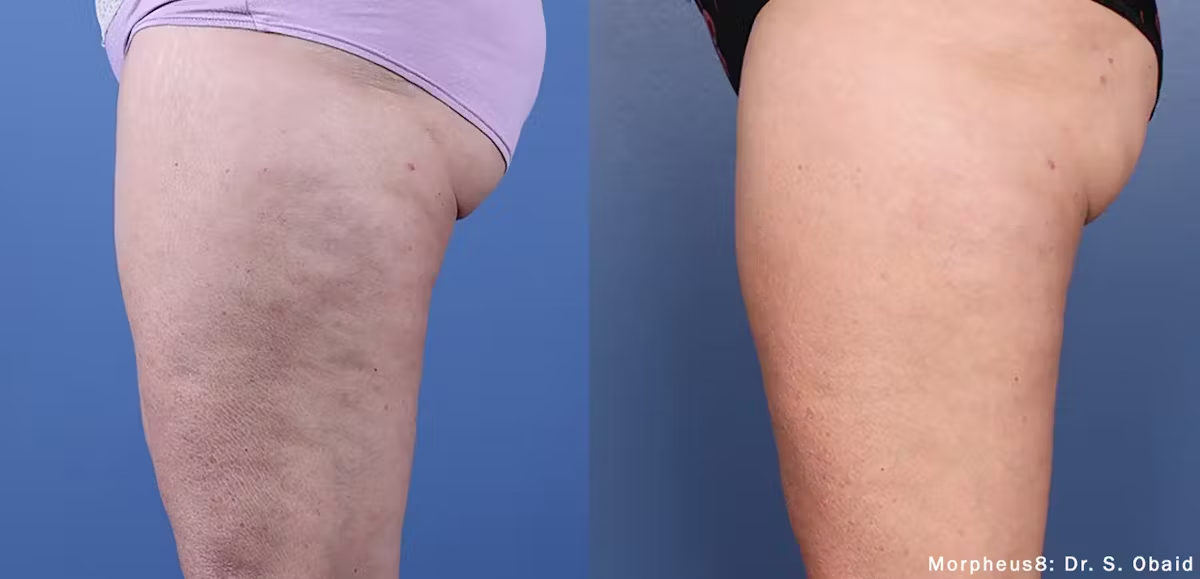
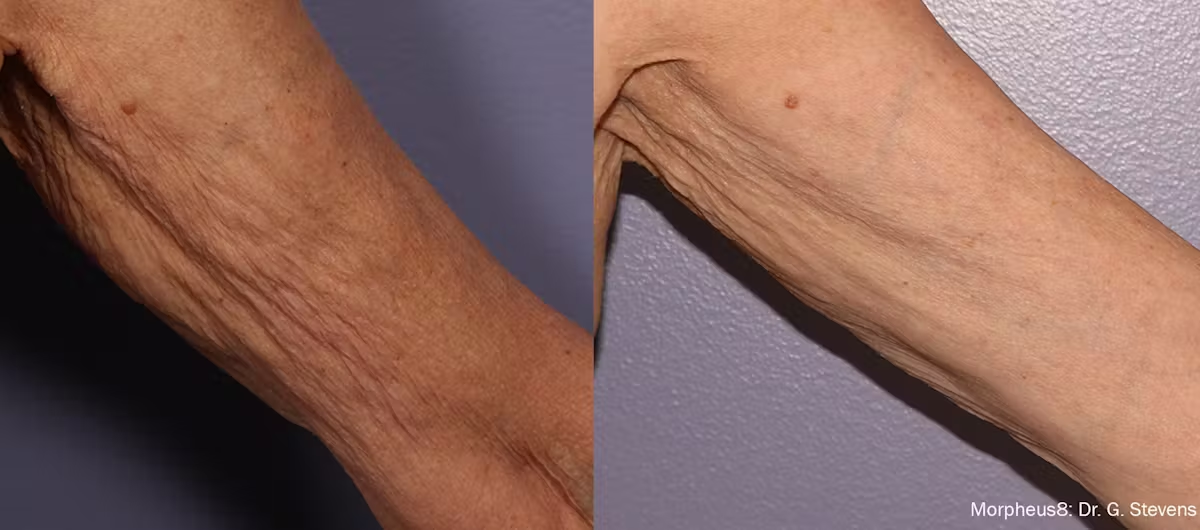
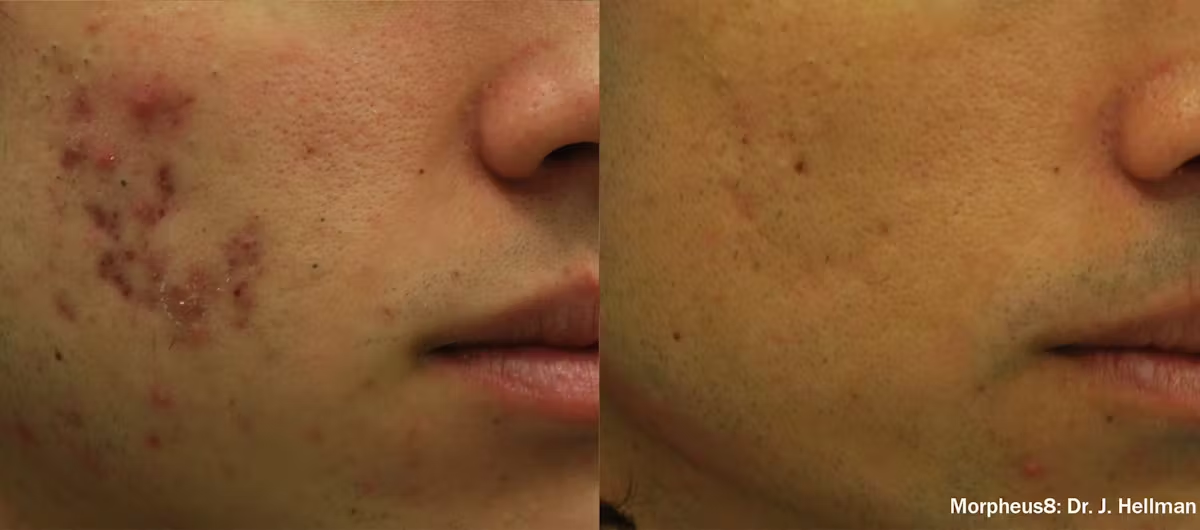
Morpheus8 combines radiofrequency and microneedling technology to contour, tighten, and resurface skin. Unlike some aesthetic treatments, Morpheus8 can be used on the face and body. We can use Pro-Nox during your treatment. It wears off fast, so you can still drive yourself home.
Morpheus8 can be used to tighten skin on the:
Benefits:



Now that you understand how menopause may impact your skin and hair, you may want to learn more about HRT therapy
Hormone replacement therapy (HRT) involves supplementing the hormones that decline during menopause, primarily estrogen and sometimes progesterone. At Valley Medical Weight Loss, we offer bioidentical hormone replacement therapy, which uses hormones that are molecularly identical to those your body naturally produces.
Estrogen’s role in skin health:
Bioidentical hormone pellet therapy:
Small pellets (about the size of a grain of rice) are inserted under the skin, typically in the hip area. These pellets release a steady, consistent dose of hormones over 3-5 months.
Benefits:
Who is a good candidate:
Through experience at Valley Medical Weight Loss, we’ve observed that women who combine HRT with targeted skincare and aesthetic treatments achieve the most dramatic improvements in skin quality, texture, and appearance.
Subscribe for expert insights on building confidence, overcoming mental barriers, and achieving lasting weight loss success. Join patients who are transforming both body and mind.Join our newsletter for expert insights on treating melasma, hyperpigmentation, and other skin concerns. Our medical aesthetic team shares practical advice to help you achieve clear, radiant skin.
Medical Consultation Disclaimer: Bioidentical Hormone Replacement Therapy requires individual medical evaluation and prescription by a licensed provider. This information is for educational purposes only and is not a substitute for professional medical advice. Always consult with your healthcare provider before starting BHRT.
Compounded Medications Notice: Compounded bioidentical hormones are available by prescription only. They are not FDA-approved and have not been evaluated for safety and effectiveness by the FDA. If right for you, and based on your individual needs, your provider may prescribe brand-name, generic, or compounded hormone products deemed necessary and appropriate.
Program Disclaimer: Valley Medical Weight Loss does not guarantee outcomes. Programs are medically supervised, but results vary by individual. All treatments require evaluation and prescription by a licensed provider.
Valley Medical Weight Loss has been helping individuals achieve their health and wellness goals for over 15 years, with more than 80,000 patients served across the Phoenix metro area. Our four convenient locations in Phoenix, Tempe, Glendale, and Chandler offer physician-supervised weight loss programs, advanced treatments, and personalized support, all with transparent pricing and no hidden fees. We believe in making effective weight loss accessible, affordable, and sustainable for everyone. Learn more about our approach.
Don’t let menopause-related skin changes diminish your confidence. At Valley Medical Weight Loss and Med Spa, we offer comprehensive solutions including hormone therapy, advanced skincare treatments, and personalized guidance.
Visit us at any location:
Hormone Therapy:
Facial Rejuvenation:
Injectable Treatments:
Related Articles:
Additional Resources:

By Dr. Samuel Zuniga, ND
Valley Medical Weight Loss | Chandler, Arizona
If you’re nearing or over 50 and your skin is starting to look and feel different or age more rapidly, it may be more than standard aging. It may be a symptom of perimenopause. For some women, menopause skin changes are some of the first symptoms they notice. If not identified as perimenopause, it’s challenging to resolve your skin issues.
At Valley Medical Weight Loss across all four Phoenix metro locations, we understand how frustrating and concerning these skin changes can be. Through work with thousands of women, we’ve seen how hormone replacement therapy (HRT), tailored skincare, and med spa treatments can dramatically improve menopause-related skin concerns.
Let’s dive into some of the ways your skin and hair may change and how you can address them effectively.
Before we dive into potential aesthetic changes, let’s uncover what menopause is. The words perimenopause and menopause are often used interchangeably. However, this natural transition has 3 distinct phases.
The three phases:
1 Perimenopause (transition phase)
2 Menopause (the milestone)
3 Postmenopause (after menopause)
Lower estrogen levels in all 3 phases increase your risk for osteoporosis, cardiovascular disease, cognitive decline, and skin issues. For this reason, many women turn to hormone replacement therapy. Hormone therapy can minimize most of the symptoms that accompany this natural transition, including minimizing menopause skin changes.
Irregular periods, hot flashes, insomnia, night sweats, and menopause belly are some of the more common perimenopause symptoms that may be on your radar. However, there are over 20 symptoms that may accompany perimenopause.
Common symptoms include:
Many women don’t realize their skin concerns are hormone-related, which is why understanding the connection is so important.
Let’s explore how these changes present themselves in perimenopause and what you can do to minimize your symptoms.
We all lose about 1% of our collagen production per year starting in our 20s. This decline accelerates during perimenopause, where collagen production will slow another 30% within the first 5 years. After the first 5 years, this decreases to a 2% loss per year.
How accelerated collagen loss affects your skin:
Bioidentical hormone therapy can minimize menopause skin changes. When combined with aesthetic treatments that boost collagen production, we can revitalize your skin.
Skincare ingredients that help:
Shifting to skincare products designed for mature skin is also advised. Particularly products containing:
Aesthetic treatments for collagen boost:
Convenience comparison:
Whether you struggled with acne or not during puberty, fluctuating estrogen levels can lead to adult acne. Painful cystic acne is more common in this phase of life.
Why menopause causes acne:
Menopausal acne won’t respond to the same skincare products as prepubescent acne. While utilizing products that contain salicylic acid is suggested, personalized skincare is essential. Visiting a dermatologist may be required to get cystic acne under control.
Treatment options:
Aesthetic treatments such as PRP and Lumecca IPL can address acne scarring once active breakouts are under control.
One of the many roles that estrogen plays in the body is contributing to moisture retention and producing the oil (sebum) that keeps your skin hydrated. When you enter perimenopause, you may notice that your skin is dry, dull, or rough a week or so before you menstruate. As time goes on, your skin from head to toe may look and feel dry, dull, and rough all month long.
This loss of hydration can intensify existing wrinkles
Tips to combat dry skin:
Hydration from within:
Topical hydration:
Environmental protection:
Professional treatments:
Menopause skin changes aren’t likely to be your only aesthetic concern. Although estrogen and progesterone levels drop during perimenopause, testosterone levels stay pretty much the same. This can lead to an increase in upper lip, chin, and facial hair. This hair may also feel dry and coarse.
Managing unwanted facial hair:
Hair loss on your head:
While you may grow more hair on your face, fluctuating hormones can cause hair follicles on your head to shrink. This can lead to thinning hair and balding in both men and women.
Solutions for hair thinning:
While not related to menopause, your skin’s pH level gradually becomes more acidic with age. This impacts both men and women. Acidity can leave your skin itchy, irritated, and more sensitive than before. If your skin is already sensitive or you have preexisting eczema or rosacea, yourx symptoms may increase in or around your 50s. When combined with the dryness that accompanies menopause, this increases the risk of rashes and slower-than-usual wound healing.
Minimize these symptoms by:
Skincare adjustments:
Dietary support:
Medical support:
Also referred to as melasma, sunspots, liver spots, and age spots, you may notice that scarring is darker and fades more slowly. You may also develop freckle-like sunspots as large as a pencil eraser on your face, neck, hands, and other areas of your body that are frequently exposed to sunlight.
Why hyperpigmentation worsens during menopause:
Fluctuating hormones impact how skin heals, often leading to scars that are a few shades darker than they used to be. Sunspots are often associated with age, but you may also develop dark patches on your body, also caused by a combination of fluctuating hormones and UV exposure.
Prevention strategies:
Treatment options
Topical treatments:
Professional treatments:
You can’t slow the increased melanin production that’s causing your hyperpigmentation, but you can address hyperpigmentation with topical products and Lumecca IPL.
The combination of decreased collagen production, increased dryness, gravity, and natural aging contributes to skin laxity. Skin laxity is inevitable, but there are a variety of skin-tightening treatments to explore. As an added bonus, the skin tightening treatments below boost collagen production to further minimize menopause skin changes.
Facial threads are ultra-thin surgical sutures strategically placed underneath the deep layers of the skin. Threads painlessly pull the skin upward or in the desired direction to address the skin laxity that accompanies aging.
Threads can be used on:
Benefits:
The Forma Skin Tightening Facial is an advanced skincare treatment that utilizes pain-free radio frequency to promote the regrowth of collagen.
Forma can be used to tighten skin on the:
Benefits:
Morpheus8 combines radiofrequency and microneedling technology to contour, tighten, and resurface skin. Unlike some aesthetic treatments, Morpheus8 can be used on the face and body. We can use Pro-Nox during your treatment. It wears off fast, so you can still drive yourself home.
Morpheus8 can be used to tighten skin on the:
Benefits:
Now that you understand how menopause may impact your skin and hair, you may want to learn more about HRT therapy
Hormone replacement therapy (HRT) involves supplementing the hormones that decline during menopause, primarily estrogen and sometimes progesterone. At Valley Medical Weight Loss, we offer bioidentical hormone replacement therapy, which uses hormones that are molecularly identical to those your body naturally produces.
Estrogen’s role in skin health:
Bioidentical hormone pellet therapy:
Small pellets (about the size of a grain of rice) are inserted under the skin, typically in the hip area. These pellets release a steady, consistent dose of hormones over 3-5 months.
Benefits:
Who is a good candidate:
Through experience at Valley Medical Weight Loss, we’ve observed that women who combine HRT with targeted skincare and aesthetic treatments achieve the most dramatic improvements in skin quality, texture, and appearance.
Subscribe for expert insights on building confidence, overcoming mental barriers, and achieving lasting weight loss success. Join patients who are transforming both body and mind.Join our newsletter for expert insights on treating melasma, hyperpigmentation, and other skin concerns. Our medical aesthetic team shares practical advice to help you achieve clear, radiant skin.
Medical Consultation Disclaimer: Bioidentical Hormone Replacement Therapy requires individual medical evaluation and prescription by a licensed provider. This information is for educational purposes only and is not a substitute for professional medical advice. Always consult with your healthcare provider before starting BHRT.
Compounded Medications Notice: Compounded bioidentical hormones are available by prescription only. They are not FDA-approved and have not been evaluated for safety and effectiveness by the FDA. If right for you, and based on your individual needs, your provider may prescribe brand-name, generic, or compounded hormone products deemed necessary and appropriate.
Program Disclaimer: Valley Medical Weight Loss does not guarantee outcomes. Programs are medically supervised, but results vary by individual. All treatments require evaluation and prescription by a licensed provider.
Valley Medical Weight Loss has been helping individuals achieve their health and wellness goals for over 15 years, with more than 80,000 patients served across the Phoenix metro area. Our four convenient locations in Phoenix, Tempe, Glendale, and Chandler offer physician-supervised weight loss programs, advanced treatments, and personalized support, all with transparent pricing and no hidden fees. We believe in making effective weight loss accessible, affordable, and sustainable for everyone. Learn more about our approach.
Don’t let menopause-related skin changes diminish your confidence. At Valley Medical Weight Loss and Med Spa, we offer comprehensive solutions including hormone therapy, advanced skincare treatments, and personalized guidance.
Visit us at any location:
Hormone Therapy:
Facial Rejuvenation:
Injectable Treatments:
Related Articles:
Additional Resources:
EXCELLENT Based on 143 reviews
 Posted on Google
 Desert InflatablesI’ve had a great experience working with Valley Medical in Chandler. I have lost 20 pounds so far with the help from Alejandra, she has been very informative on this journey. Everyone here is very friendly and personable. If you are looking to lose weight and have more energy I would highly recommend coming to start your journey!Posted on Google
 Juice Butterfly TarotLove it here ! Friendly, fast and makes me feel motivated ! Christine and Amelia were phenomenal slay queens ! I've lost 5ibs since being here ! I'm ready to keep going 🩵Posted on Google
 Chaz WalkerAlejandra was fantastic one of the best workers up in the office had a great and uplifting attitude she went above and beyond to help answers all questions efficiently would highly recommend goin here 12 out of 10 ratings great jobPosted on Google
 Jimmy HillI highly recommend Valley Medical Weight Loss! Alejandra has been amazing from day one supportive, motivating, and truly invested in my success. In just over 8 weeks, I’ve lost nearly 30 pounds. They genuinely care about your health and make the process feel manageable and personalized. Thank you, Alejandra!Posted on Google
 Antoinette ScottAwesome staff, courteous and clean. I’m down 40 lbs in one month. Prices for supplements are better than getting them from Amazon!Posted on Google
 Eira LeyvaStephanie muy linda y atenta persona muy buena explicación hacerca del tratamientoPosted on Google
 Alice McLemoreHappy they have a location in chandler now. Staff is extremely friendly and helpful.Posted on Google
 Andrea MadridI’ve had a great experience here so far. The staff is absolutely amazing very kind, supportive, and always willing to answer my questions. They truly make you feel comfortable and encouraged throughout the weight-loss process. I’m seeing results and feel well taken care of. Highly recommend!Posted on Google
 Nelly IriasLove the new clinic, the space is beautiful and welcoming, and the staff was amazing! Alejandra took great care of me. She was very informative, made me feel comfortable throughout the whole process, and I honestly didn’t even feel my injection. Such a great experience, and I’m already looking forward to coming back!Verified by TrustindexTrustindex verified badge is the Universal Symbol of Trust. Only the greatest companies can get the verified badge who has a review score above 4.5, based on customer reviews over the past 12 months. Read more
By: The Hidden Epidemic of Sexual Health and What We Can Do

By: Health and wellness technology has exploded in recent years. From smartwatches

How to Stay Motivated with Slow Weight Loss By: You’re doing everything
We use cookies to improve your experience on our site. By using our site, you consent to cookies.
Manage your cookie preferences below:
Essential cookies enable basic functions and are necessary for the proper function of the website.
CleanTalk offers effective spam protection and website security solutions to enhance user experience.
Service URL: cleantalk.org (opens in a new window)
These cookies are needed for adding comments on this website.
Google reCAPTCHA helps protect websites from spam and abuse by verifying user interactions through challenges.
Google Tag Manager simplifies the management of marketing tags on your website without code changes.
Trustindex collects reviews from platforms such as Google, Facebook and Tripadvisor and displays them on a site as embedded review widgets, rating badges and social media feeds.
Service URL: www.trustindex.io (opens in a new window)
WooCommerce is a customizable eCommerce platform for building online stores using WordPress.
WP Consent API is a plugin that standardizes the communication of accepted consent categories between plugins.
WPForms is a user-friendly WordPress plugin for creating custom forms with drag-and-drop functionality.
Statistics cookies collect information anonymously. This information helps us understand how visitors use our website.
Google Analytics is a powerful tool that tracks and analyzes website traffic for informed marketing decisions.
Service URL: policies.google.com (opens in a new window)
Jetpack's built-in visitor analytics. It records page views, referring sites, search terms, and outbound link clicks, and also carries the shared visitor-tracking library used by Jetpack Instant Search and WooCommerce Analytics.
Service URL: automattic.com (opens in a new window)
Google reCAPTCHA helps protect websites from spam and abuse by verifying user interactions through challenges.
SourceBuster is used by WooCommerce for order attribution based on user source.
Marketing cookies are used to follow visitors to websites. The intention is to show ads that are relevant and engaging to the individual user.
TikTok Pixel is a tracking tool that measures user interactions and optimizes ad campaigns on the TikTok platform.
Service URL: ads.tiktok.com (opens in a new window)
You can find more information in our Cookie Policy and .
Monday, Tuesday, Thursday, Friday: 9:00 am-4:30 pm
Saturday: 8am-1:30pm
Wednesday & Sunday: Closed
Med Spa: By appointment only